PC+NMRV-spiralformad snäckväxel för indexeringsbordmekanismer
Indexing tables rotate a workpiece or assembly through a series of fixed stations, with each indexing move needing to land precisely at the same position cycle after cycle across potentially millions of cycles over the equipment’s service life. Positioning drift that would be tolerable in many applications compounds into real production quality issues on an indexing table, where each station’s tooling and processes assume the workpiece arrives at exactly the same point every time.
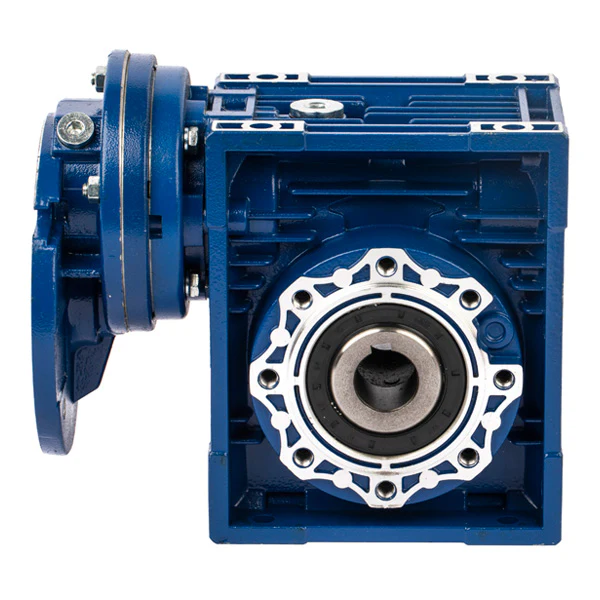
Ever-Power’s PC+NMRV helical-worm series is specified into indexing table applications across Australian manufacturing and assembly automation, where the combination of low backlash, self-locking station holding, and compact right-angle output suits this demanding positioning duty. This page covers the technical fit for indexing table drives, three manufacturing facility deployments, and answers to specification questions from equipment designers.
Indexing Accuracy Requirements Across the Table’s Service Life
| Indexing Table Demand | PC+NMRV Design Response |
|---|---|
| Consistent station position over millions of cycles | Low-backlash helical pre-stage minimises positioning error accumulation |
| Position holding while station processes occur | Self-locking worm output stage holds station without continuous servo torque |
| Rapid indexing between stations | Helical stage’s higher input speed compatibility supports fast indexing motion |
| Compact footprint beneath the table | Right-angle output configuration fits typical indexing table mounting envelopes |
Manufacturing Facility Examples
Automotive Parts Assembly — Adelaide
Pain point: A multi-station assembly indexing table was showing gradual positioning drift over extended production runs, traced to backlash accumulation in the original drive mechanism.
Solution: PC071+NMRV050 replacement delivering confirmed low-backlash performance maintained consistent station positioning across extended production campaigns.
Result: Positioning consistency maintained across subsequent high-volume production runs following the upgrade.
Electronics Test and Assembly — Sydney
Pain point: An electronics testing indexing table needed faster station-to-station cycle time to meet a production rate increase, without compromising the positioning accuracy testing equipment required.
Solution: PC063+NMRV040 specified for servo compatibility supporting the faster cycle rate while maintaining the table’s required positioning tolerance.
Result: Increased production cycle rate achieved while maintaining the testing station’s positioning accuracy requirement.
Precision Machining Workholding — Melbourne
Pain point: A precision machining facility’s rotary workholding indexer needed exceptionally reliable station holding during cutting operations, where any drift would directly affect part accuracy.
Solution: PC080+NMRV075 specified for the combination of low backlash positioning and confirmed self-locking holding during the machining cycle.
Result: Consistent part accuracy maintained across the indexer’s production schedule following installation.
Why Equipment Designers Specify Ever-Power’s Helical-Worm Series
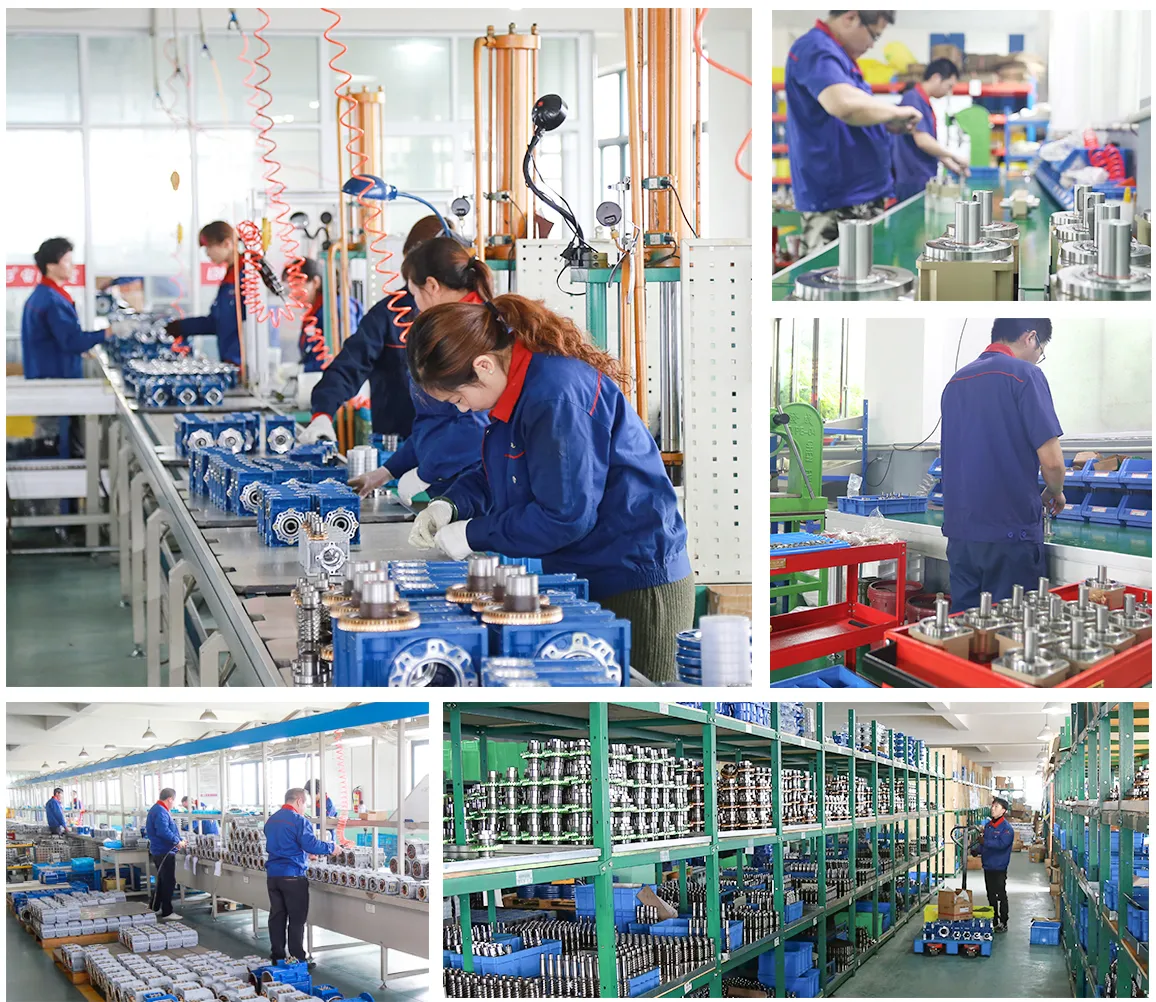
| 🏭 Manufacturing Precision — over two decades of production experience extended across both gear stages of the helical-worm combination series |
| 📡 Indexing Application Engineering — confirm the correct combination against your station count, cycle rate, and positioning tolerance requirements |
| 🔧 New Equipment Design Support — OEM configuration options for indexing table manufacturers developing new equipment |
| 💰 Factory Direct Pricing — competitive cost from prototype development through to full production manufacturing volumes |
Vanliga frågor
How does positioning accuracy hold up over millions of indexing cycles?
The helical pre-stage’s lower inherent backlash compared to a worm-only input reduces the rate of positioning error accumulation over extended service life. Actual long-term accuracy depends on your specific load, ratio, and duty cycle — we can discuss expected performance characteristics for your application during specification.
How many index stations can a single gearbox drive?
The gearbox itself drives the table’s rotational positioning; the number of index stations is determined by your table and tooling design rather than the gearbox. Provide your station count and required index angle per cycle, and we will confirm the appropriate ratio for your specific indexing pattern.
Will the table hold its station position during a machining or assembly operation without drift?
Yes, the NMRV worm output stage’s self-locking behaviour above the standard ratio threshold holds the table in its indexed position without requiring continuous servo holding torque, which is valuable during station operations like machining or precision assembly where positional stability matters.
What cycle rate is achievable with the PC+NMRV series for high-throughput applications?
Achievable cycle rate depends on your specific ratio, servo motor capability, and the table’s mechanical design including inertia and required index angle. Provide your throughput target and table specifications, and we will confirm whether your target cycle rate is achievable with the appropriate gearbox configuration.
Can you support our indexing table design from concept through to production?
Yes, we support equipment designers from initial concept and prototype development through to full production manufacturing, maintaining consistent specification as your design matures. Engage our team early in your design process for the most effective integration support.
What’s the cost difference between PC+NMRV and a standard worm-only NMRV for indexing applications?
PC+NMRV units typically carry a higher unit cost than standard NMRV due to the additional helical stage, reflecting the improved backlash and efficiency performance. Whether this premium is justified depends on your specific positioning tolerance and cycle rate requirements — we can advise on whether your application genuinely needs the helical-worm combination or whether standard NMRV meets your needs at lower cost.
Explore the full helical-worm range on our PC+NMRV-seriens sida, or browse other automation applications on our applikationssida.